





My Favourite Child


Anyone working with children is told we shouldn't have favourites. It feels almost wrong to admit it, but... we do. Here's the thing though: that favourite child is always the one sitting right in front of me.
During sessions, it's just them and me. We delve deep, explore their needs and vulnerabilities, and navigate the messy path to healing. In that space, the world fades away. It's a powerful connection, and sometimes, I might say things like, "You have made my day" or "You're simply the most wonderful" or "Who's the best person to hang out with?!".
At first, I worried these phrases could be perceived as disingenuous if used with every child. But then I realised: they're true. In that moment, in that unique space we create, they are the most wonderful person in the world.
Here's the key: these compliments aren't about comparison. Every child I work with possesses a unique spark, a beautiful and powerful self waiting to be discovered. And during our sessions, I get the privilege of witnessing that.
So, yes, I have a favourite child. But that favourite changes every time I sit down to work with someone new. It's a beautiful reminder of the potential and strength that lies within each and everyone of us.
The Power of Connection: Play, Structure, and Building Wholesome Selves
Following up on the idea of the child in the room, let's delve deeper into my approach to therapeutic sessions with children.
Building a Foundation: The Power of Relationships
My sessions are firmly rooted in a relational approach. Dr. Karen Treisman beautifully articulates it: "relational trauma requires relational repair." Within this secure and supportive space, children can explore their vulnerabilities and navigate the path to healing.
Play: The Natural Language of Healing
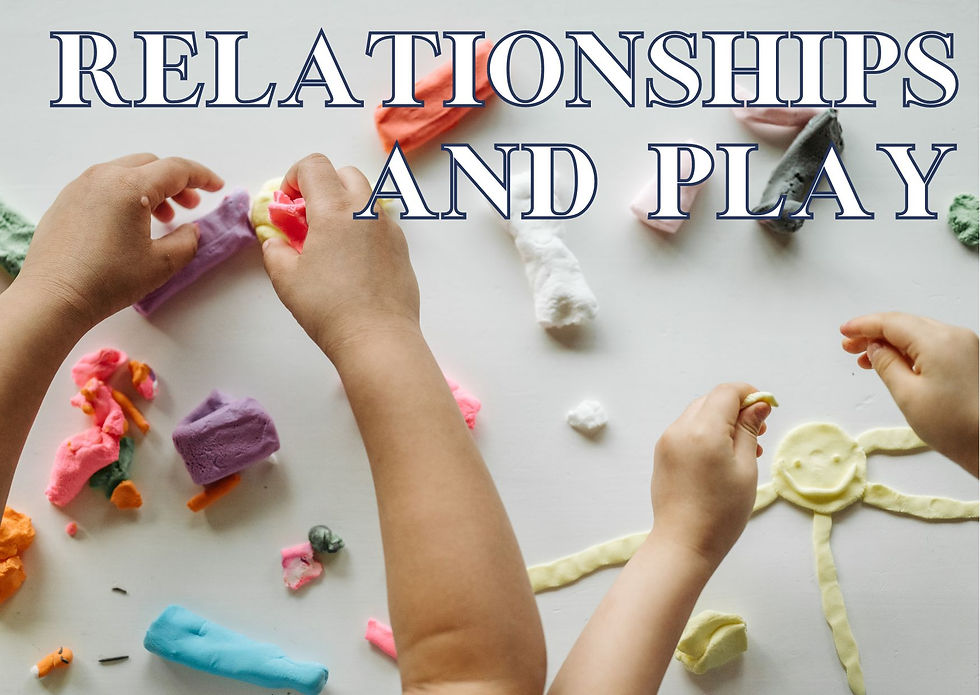
Play serves as a powerful tool in my sessions. Children naturally communicate and process experiences through play. It's a way to connect on their level, fostering trust and creating a safe space for exploration. Through playful interactions, humour, and empathy, we can work through difficult topics, fostering a sense of empowerment.
Beyond Play: The Importance of Structure
However, I acknowledge the need for clarity within this relational approach. While play is crucial, a purely unstructured environment can leave children feeling lost. I have seen children playing with Legos in the back of their class without any guidance on building something specific, weeks on end. There's a sense of aimlessness that can be frustrating and the kids' development stays stagnant.
Here's where the missing ingredient comes in: integrating the knowledge of child development. Understanding the developmental stages and milestones aids in providing a gentle structure, guiding them towards mastering new skills. This structure doesn't contradict the relational approach; it complements it. It's like building a framework for their exploration, ensuring they have the tools they need to unfold their whole selves.
Understanding Safe Relationships
My observations in schools further strengthen this point. I've seen adults present in play areas, yet not actively engaging. This may indicate a lack of understanding of what a "safe relationship" truly means. Safety transcends the absence of physical threat. It's a feeling of belonging, of being seen, heard, and understood. This requires active engagement, fostering a connection that allows children to feel secure enough to explore and grow. Especially for those who feel unsafe within themselves and whose place in the world feels insecure.
The Conversation Continues
We've heard a lot about the relational approach and the importance of play. I propose adding the element of child development to create a more holistic approach. This is a conversation I'd love to continue. How clear do you feel about these approaches? Share your views and experiences in the comments below!
The Journey to Wholeness: An Evolution in My Therapeutic Work
The ideas I shared about integrating structure with relational play are a culmination of my own journey – a path paved with both strengths and the recognition of shortcomings.
A Natural Connection: Children, Silliness, and Authenticity
Connecting with children has always been my gift. Their raw honesty, playful nature, and bravery to be themselves completely resonate with me. I've always found it easy to tap into my own silliness and humour around children, never feeling self-conscious in their presence.
Understanding the Power of Empathy and Trauma
My fascination with trauma deepened my understanding of empathy and its transformative power. It opened my eyes to how experiences can leave us stuck developmentally, causing us to regress to earlier states. Honestly, understanding trauma has become a passion of mine – it's a lens that completely changes how I view interpersonal relationships. Trauma training was a game-changer!
The Strength of Structure
However, my journey wasn't complete. While I excelled at connecting with children, I witnessed the shortcomings of purely unstructured play environments. My experience in schools confirmed this – children left to play with Legos without guidance often felt lost and frustrated.
The missing piece? The knowledge of child development. My training in the Thrive Approach provided the framework – the understanding of developmental stages and milestones – to offer gentle structure, guiding children as they master new skills. It wasn't a contradiction, but a way to empower their exploration within a supportive framework.
There's Always a Way
This approach also addressed a disheartening trend I encountered: professionals throwing out phrases like "We've tried everything" or "This child is different, there's nothing we can do." Fuelled by the Thrive Approach, I refused to accept those limitations. Integrating child development with a relational approach has shown me that there's always a way to help children reconnect with their playful, authentic selves.
This journey is far from over, and I'm eager to continue the conversation. Share your thoughts and experiences in the comments below! Let's keep building a holistic approach to empower children to reach their full potential.


Comments